
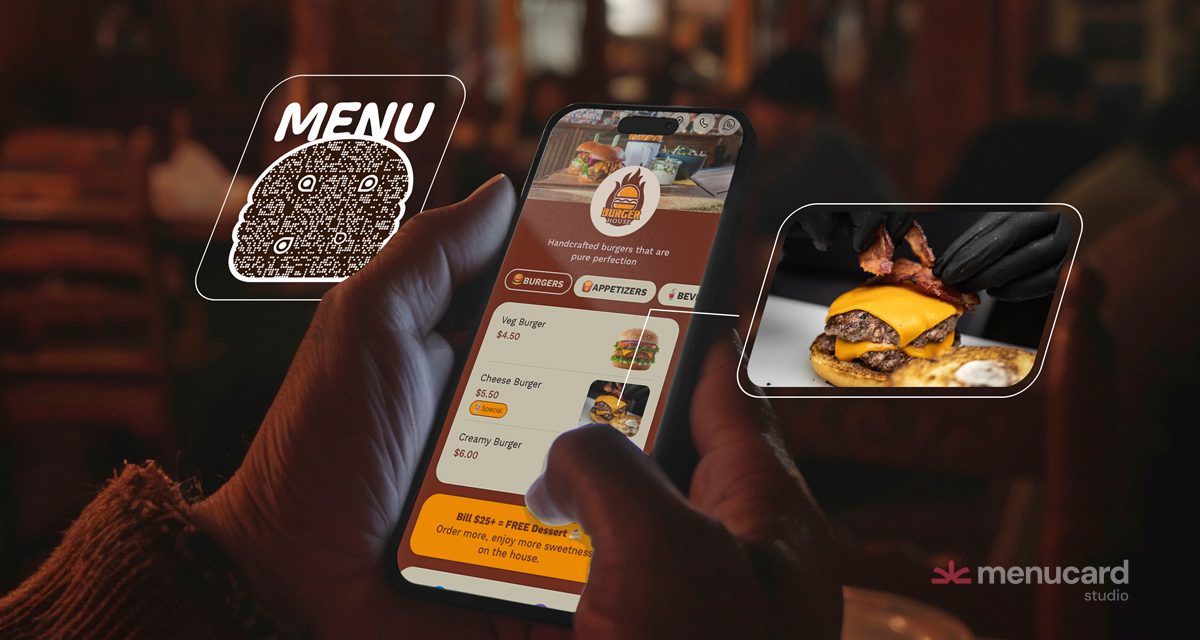
There is a quiet shift happening inside restaurants—not in the kitchen, but on the menu.
For decades, menus have relied on text and static images to communicate taste. But taste is not static. It’s dynamic, emotional, and sensory. And in a world shaped by reels, short videos, and visual storytelling, customers no longer just read menus—they experience them.
At our studio, working with restaurants across different scales—from street cafés to premium dining—we’ve observed a consistent pattern:
When restaurants switch from static menus to video menus, order values increase by 20% to 30%.
This isn’t a trend. It’s psychology.
Let’s break down why video menus work, how they influence customer decisions, and how you can use them to increase your restaurant’s revenue.
The Problem with Traditional Menus

Traditional menus rely heavily on imagination.
A customer reads:
“Grilled peri-peri chicken with smoky sauce”
But what they see is limited to their own mental image.
That gap between description and imagination is where you lose orders.
- The dish feels uncertain
- The craving is weak
- The decision is delayed
And in a fast-paced dining environment, hesitation leads to:
- Lower order value
- Safer choices (cheapest or familiar items)
- Missed upsell opportunities
Why Video Menus Work: The Psychology Behind It


Human beings don’t buy food based on logic.
They buy based on craving.
And craving is triggered by sensory stimulation.
1. Movement Creates Attention
Our brains are wired to notice motion.
A static image is easy to ignore.
A video—even 3–5 seconds—grabs attention instantly.
This is why platforms like Instagram Reels and YouTube Shorts dominate engagement.
👉 In a restaurant, the same principle applies:
- A moving burger drip shot
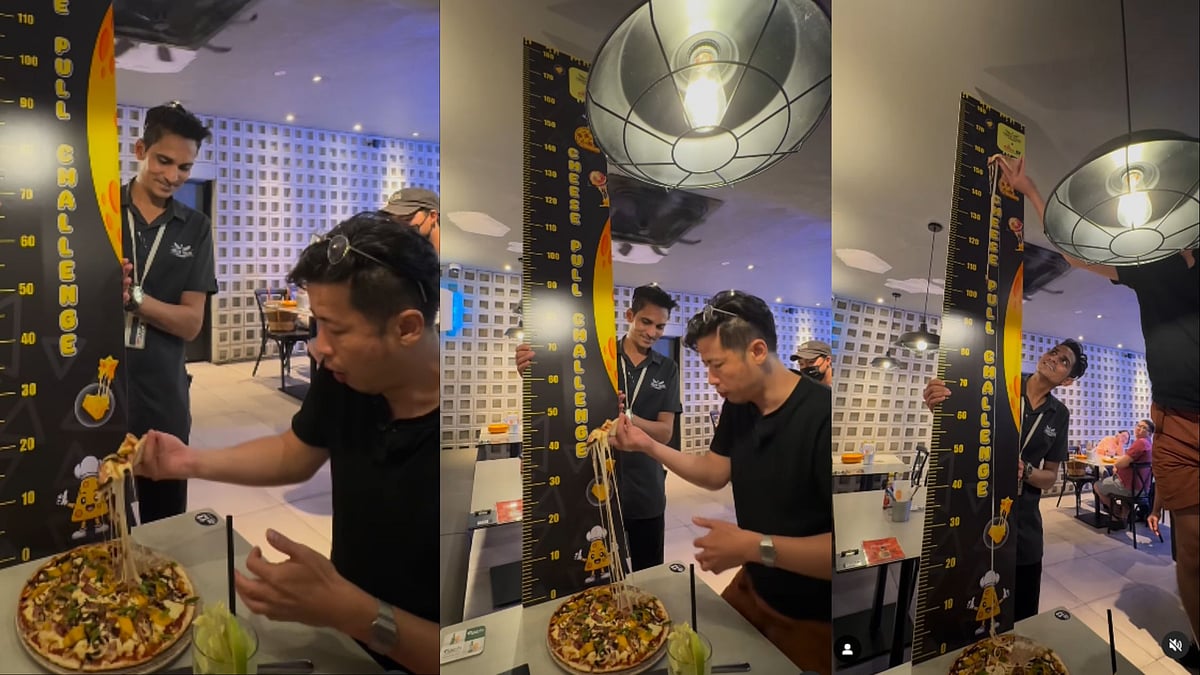
- Cheese stretch from pizza
- Steam rising from biryani
These visuals interrupt decision fatigue.
2. Videos Trigger “Anticipatory Taste”
When a customer watches food in motion:
- They imagine the texture
- They predict the taste
- They feel hunger instantly
This is called anticipatory sensory response.
It’s the same reason why:
- Food ads increase hunger
- Cooking videos go viral
- Street food reels get millions of views
👉 A well-shot 5-second video can do what a paragraph of description cannot.
3. Reduces Decision Friction
Customers often ask:
- “How big is this?”
- “Is it spicy?”
- “How does it look?”
Video answers all of this instantly.
Result:
- Faster decisions
- More confidence
- Higher conversion
4. Increases Perceived Value
When customers see a dish:
- It feels premium
- It feels worth the price
- It feels “Instagram-worthy”
👉 A ₹120 burger looks like ₹199 when presented through video.
This directly increases:
- Average order value
- Upsell success
Real Scenario: How Restaurants Increase Orders by 30%
Let’s take a practical example from our experience.
Case: Café Switching to Video Menu
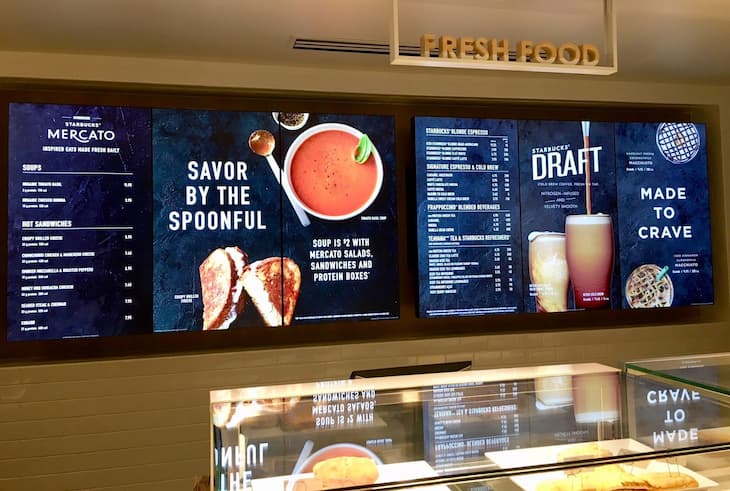


Before:
- Static menu with text + few images
- Customers ordering:
- 1 burger
- 1 drink
👉 Average bill: ₹180–₹220
After Adding Video Menu (via QR code):
Each item had a 5–8 second video:
- Burger cheese melt
- Fries being salted
- Cold coffee pouring
Result:
Customers started ordering:
- Burger + fries combo
- Add-ons (extra cheese, dips)
- Desserts (triggered by video)
👉 Average bill: ₹250–₹300
➡️ Increase: ~25–30%
Why This Happened:
- Customers felt hungry while browsing
- Visuals created impulse buying
- Add-ons became irresistible
Where Video Menus Work Best


Video menus perform exceptionally well for:
🍔 Fast Food
- Burgers, sandwiches, fries
- Cheese and sauces look irresistible
🍕 Pizza & Café
- Cheese pulls, toppings
- Coffee pours and foam
🍰 Desserts
- Chocolate flow, slicing
- High emotional trigger
🍛 Indian Cuisine
- Butter drizzle
- Steam and spice visuals
👉 Any dish that has movement, texture, or transformation works best.
How to Implement Video Menu (Simple Strategy)
You don’t need a big production setup.
Step 1: Shoot Simple Videos
- Use a smartphone
- Focus on:
- Close-ups
- Slow motion
- Lighting
👉 5–8 seconds per dish is enough
Step 2: Use QR Code Menu
- Customers scan at table
- Videos auto-play inside menu
This removes:
- Printing cost
- Update issues
Step 3: Highlight High-Profit Items
Don’t make videos for everything.
Focus on:
- Combos
- Add-ons
- Best margin dishes
Step 4: Use Looping Videos
Short looping videos work best:
- No sound needed
- Continuous engagement
Common Mistakes to Avoid
- ❌ Long videos (keep under 10 sec)
- ❌ Poor lighting (food looks dull)
- ❌ Too many items (overload)
- ❌ No focus on best sellers
👉 Quality > Quantity
Future of Restaurant Menus
Menus are evolving into interactive experiences.
What started as:
- Paper → Digital → QR
Is now moving towards:
- Video menus
- AI recommendations
- Personalized ordering
Restaurants that adapt early:
- Increase revenue
- Improve customer experience
- Stand out from competitors
Final Thought
A menu is not just a list of items.
It is your primary sales tool.
If your menu cannot:
- Trigger hunger
- Create desire
- Drive impulse
Then it is silently costing you revenue.
Video menus bridge the gap between seeing and craving.
And in the restaurant business,
craving = conversion.
Leave a Reply