
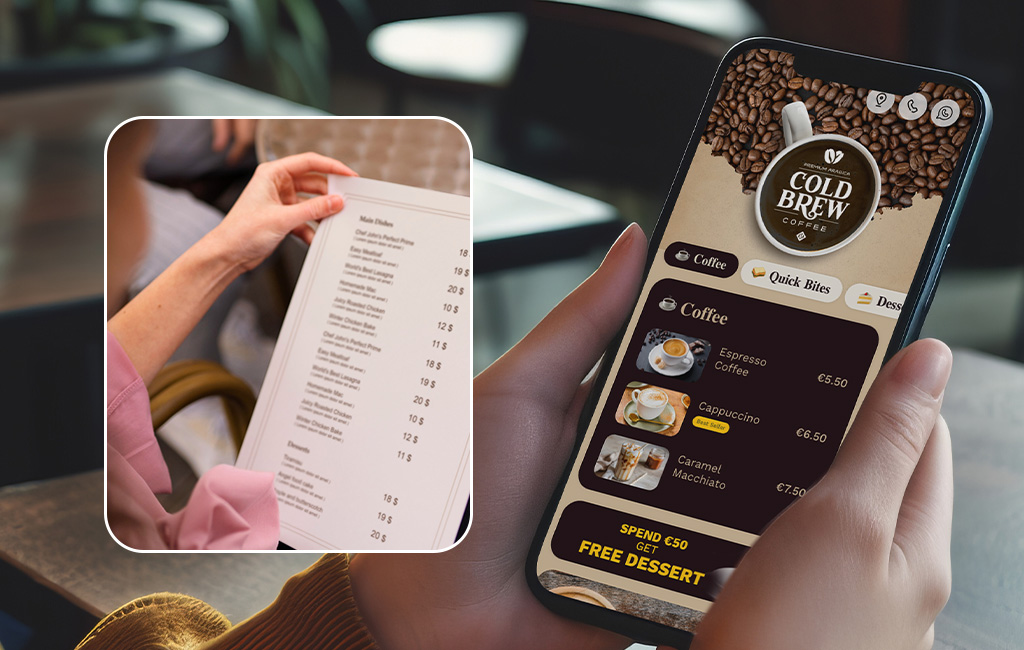
The way restaurants present their menus is no longer just about listing dishes—it’s about influencing customer decisions, increasing order value, and creating a modern dining experience. The debate between QR code menus and traditional printed menus is no longer theoretical. Today, restaurants across the world are shifting toward digital solutions because they directly impact revenue, efficiency, and customer engagement.
If you’re a restaurant owner, café operator, or cloud kitchen brand, this guide will help you clearly understand why QR code menus are outperforming traditional menus—and how you can use them to grow your business.
The Traditional Menu: Familiar but Limited
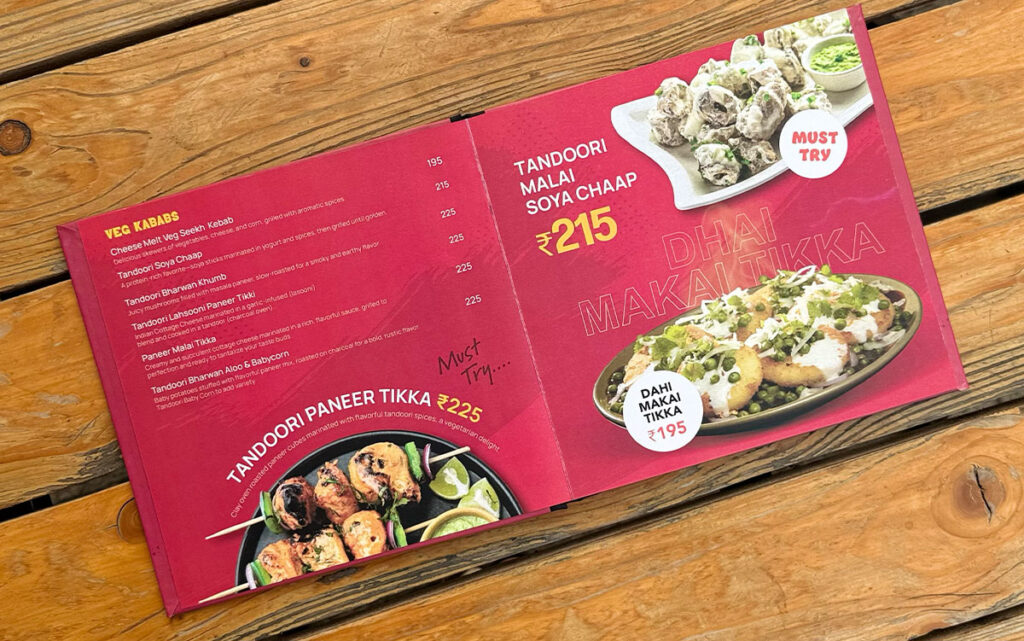
Printed menus have been the backbone of restaurants for decades. They are tangible, easy to use, and require no technology from customers. However, they come with serious limitations that directly affect your business growth.
Once a menu is printed, it becomes static. You cannot change prices instantly, update dishes, or highlight new items without reprinting. If an item is out of stock, customers still see it, order it, and end up disappointed. This creates a poor dining experience and puts pressure on your staff.
Another major drawback is cost. Printing menus regularly—especially for restaurants with seasonal pricing or changing ingredients—becomes expensive over time. Wear and tear, stains, and frequent updates add to recurring costs.
Traditional menus also lack intelligence. They don’t track what customers view, what they like, or what influences their ordering decisions. In short, they are passive tools in a highly competitive, data-driven industry.
QR Code Menu: The Smart Upgrade
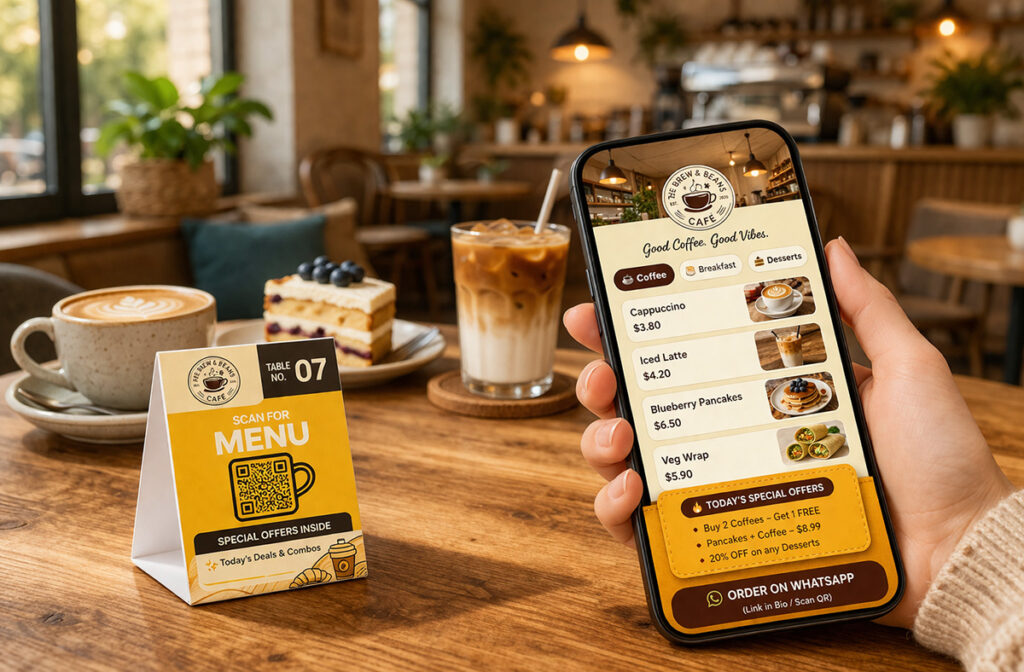
A QR code menu transforms your menu into a dynamic, interactive, and powerful sales tool. Customers simply scan a QR code placed on the table and access your digital menu instantly on their phone.
But the real advantage isn’t just convenience—it’s control, flexibility, and psychology-driven selling.
1. Instant Price Updates Without Reprinting
One of the biggest advantages of a QR code menu is the ability to update prices instantly.
In traditional menus, if tomato prices increase or supplier costs change, you’re stuck with outdated pricing until you print new menus. This leads to either reduced margins or awkward customer conversations.
With a QR code menu, you can:
- Change prices in real-time
- Adjust rates based on demand or time (weekends vs weekdays)
- Run limited-time pricing offers
This gives you complete pricing control without any additional cost.
2. Hide Out-of-Stock Items Instantly
Nothing frustrates customers more than ordering something that isn’t available.
With printed menus, you either:
- Inform customers after they order
- Or manually tell every table what’s unavailable
This creates a negative experience.
With a QR code menu, you can instantly:
- Hide out-of-stock items
- Disable ordering for specific dishes
- Update availability in seconds
This keeps your menu clean, accurate, and frustration-free.
3. Highlight High-Profit and Popular Items
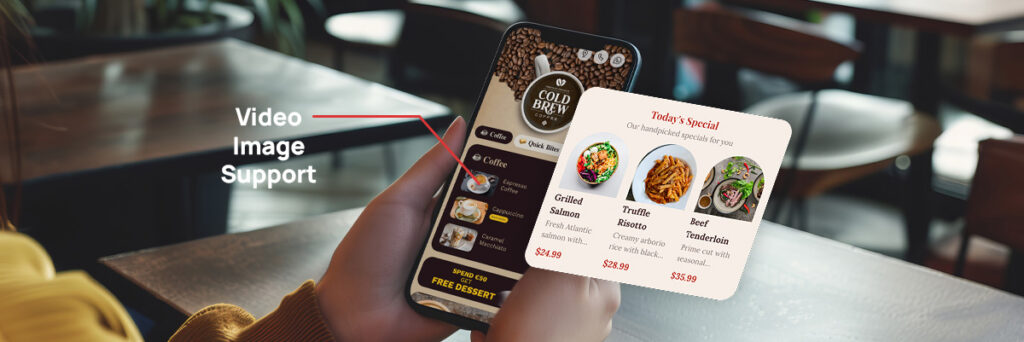
Traditional menus treat every item equally. But smart restaurant owners know that not all dishes generate the same profit.
With a QR code menu, you can strategically:
- Highlight high-margin items
- Place popular dishes at the top
- Add tags like “Best Seller” or “Must Try”
- Use visual emphasis (colors, badges, positioning)
This subtly influences customer decisions and increases your average order value without pushing sales aggressively.
4. Promote “Today’s Special” Effectively
Most restaurants write “Today’s Special” on a board near the entrance. The problem? Customers often forget or don’t notice it once they sit down.
With a QR code menu, you can:
- Show “Today’s Special” at the top of the menu
- Add eye-catching banners
- Include limited-time offers directly in front of the customer
Now, every customer at every table sees your special items—boosting visibility and sales instantly.
5. Eliminate Printing Costs Completely
Printing menus is not a one-time expense. It’s ongoing.
You need to:
- Reprint when prices change
- Replace damaged menus
- Update seasonal items
Over a year, this can cost thousands.
A QR code menu removes this expense entirely. You pay once for setup and can update your menu unlimited times without additional cost.
For growing restaurants and cafés, this significantly improves profit margins.
6. Capture Customer Data (Your Hidden Goldmine)
Traditional menus don’t help you build customer relationships. Once a customer leaves, you have no way to reach them again.
QR code menus can change that.
You can:
- Collect phone numbers or emails (via optional login or offers)
- Integrate WhatsApp ordering
- Build a customer database
This allows you to:
- Send offers and discounts
- Promote new dishes
- Bring customers back repeatedly
In today’s competitive market, owning customer data is one of the biggest advantages.
7. Show Food Preparation Videos (Trigger Cravings)
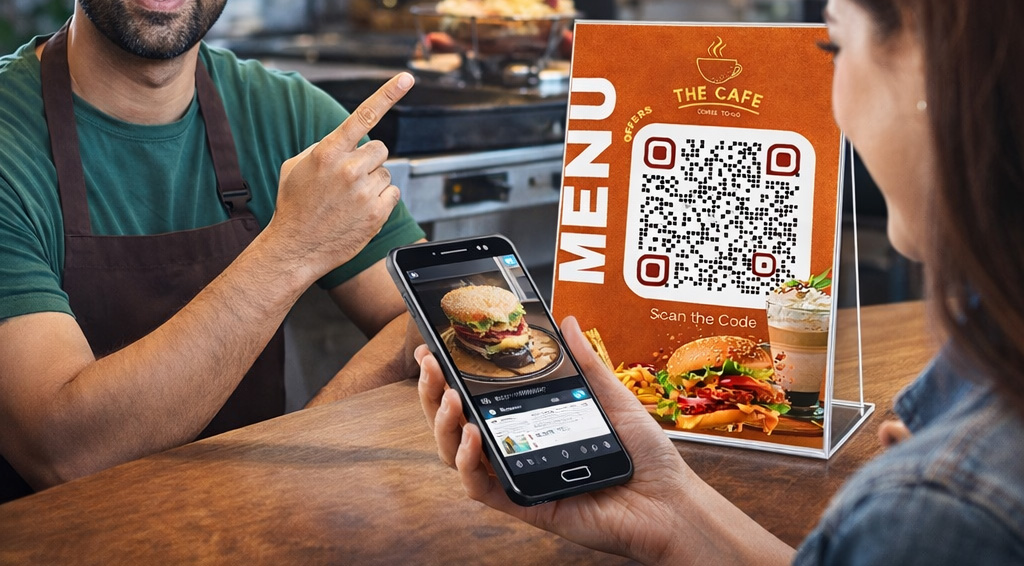
Customers don’t just buy food—they buy experiences and emotions.
With a QR code menu, you can:
- Add preparation videos of dishes
- Show cheese melting, sizzling pans, or plating
- Display real cooking processes
This taps into human psychology. When customers see food being prepared, their cravings increase—and they are more likely to order.
This is the same reason why cooking videos perform extremely well on platforms like Instagram.
Now imagine bringing that same experience directly to your dining table.
8. Build Trust with Chef Stories and Brand Storytelling
Customers love to connect with brands.
With a digital menu, you can:
- Show your chef’s story
- Share your restaurant journey
- Highlight ingredients or sourcing
This builds emotional connection and trust, which traditional menus simply cannot do.
A connected customer spends more, returns more often, and recommends your restaurant to others.
9. Faster Ordering and Better Customer Experience
QR code menus reduce dependency on staff for basic interactions.
Customers can:
- Browse instantly
- Take their time deciding
- Avoid waiting for menus
This improves:
- Table turnover
- Service efficiency
- Overall experience
In busy restaurants, this can significantly increase daily revenue.
10. Real-Time Menu Optimization (Data-Driven Growth)
A QR code menu gives you insights that printed menus never can.
You can track:
- Which items are viewed most
- What customers click but don’t order
- Which items perform best
This helps you:
- Improve menu design
- Remove underperforming dishes
- Focus on profitable items
It turns your menu into a smart business tool—not just a list.
Traditional Menu vs QR Code Menu: Final Comparison
| Feature | Traditional Menu | QR Code Menu |
|---|---|---|
| Price Updates | Not flexible | Instant |
| Out-of-Stock Handling | Manual | One-click |
| Highlighting Items | Limited | Advanced |
| Printing Cost | High | Zero |
| Customer Data | Not possible | Easy collection |
| Visual Experience | Static | Videos, images |
| Marketing | None | Built-in |
| Updates | Slow | Instant |
Which One Should You Choose?
The answer is clear.
If you want to run a modern, profitable, and scalable restaurant, a QR code menu is no longer optional—it’s essential.
Traditional menus may still work for basic operations, but they limit your growth. On the other hand, QR code menus give you control, insights, and powerful tools to increase revenue.
Final Thoughts
Restaurants that adapt to technology grow faster. QR code menus are not just about going digital—they are about selling smarter.
From updating prices instantly to showing craving-triggering videos, from reducing costs to collecting customer data, QR menus give you a complete advantage in today’s competitive food industry.
If you’re still relying only on printed menus, you’re not just saving tradition—you’re losing opportunities.
Now is the time to upgrade.
Leave a Reply